



Ask an Attorney a Question for FREE!
Arbitration
When a Car Accident Cannot Be Settled
The arbitration process is often used by insurance companies when two carriers have a dispute over fault and/or damages (i.e. car damage and/or amount of medical bills).
The dispute can be for one of those factors or for all of them.
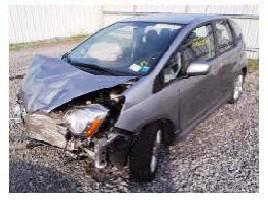
There can be dispute as to “who is at fault” (or what percentage of fault should be attributed to each of the parties), a dispute of how much your medical bills should be, the amount of your rental car bill, or all of it together.
Arbitration occurs after both insurance companies have conducted an investigation of the facts and they cannot agree on those facts, and their implications.
Word v. word cases where there is no witnesses often ends up in arbitration.
A common dispute is the red - green light dispute.
Each insurance company is obligated to “believe” their insured unless there is independent evidence against her (a witness or a police report).
Because each carrier has this duty (and if they do not obey this duty, they can be acting on bad faith), they must take this matter to arbitration.
What is Arbitration?
Arbitration is a pre-agreed forum to resolve a dispute.
In the case of car accidents, insurance companies that are members of the National Association of Arbitrators (they pay a fee for this membership) agree that the decision of the arbitration panel will be final. There will be no appeals, no arguing, nothing else.
The arbitration decision is binding upon the insurance companies, even if the decision is believed to be a “bad one” or even if new evidence comes up, the decision will still stand.
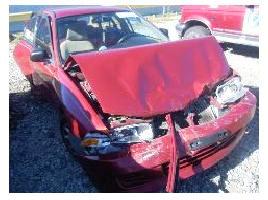
Arbitration really is a contract between the parties (between insurance companies and between the insurance company and the insured) to a pre-agreed mediation.
This is important because it has implications on whether or not an arbitration decision is binding or not. (See the section on binding arbitration.)
Arbitration is conducted by a panel of “independent” claim adjusters. Independent, in this context, means being related to neither of the insurance companies involved in the dispute.
If for example there is a case between All State and Geico, then the arbitrator might be a State Farm adjuster.
These panels are usually formed of one arbitrator but sometimes (and in more difficult claims) up to three arbitrators.
These adjusters are usually considered more experienced in their fields and are supposed to be unbiased, but it is my experience that they do play favorites and they have a “pre-conceived” notion regarding accidents (i.e. parking lot accidents should always have some negligence on both parties).
This is one of the reasons you need to understand the arbitration process so you do not end up with an arbitration decision that you do not like.
Unfortunately, consumers and insurance companies take no part in the selection of the panel. So you get what you get, good or bad, and since the decision cannot be appealed, it can really affect you adversely.
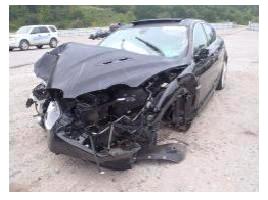
Insurance adjusters are encouraged to settle among themselves because the arbitration process does cost the insurance company money.
Often, it costs them a lot less to settle over the telephone, than putting an entire arbitration file together.
However, the arbitration cost is significantly less than an actual court case. So, arbitration is rather common among carriers.
Your Arbitration Case
Mandatory to who and when?
Binding Arbitration
Mediation
Find a Qualified Attorney in Your City
|
For a Free Review of Your Case
Please Call (866) 878-2432 |

Auto Insurance Claims Home | Auto Claim Questions | Free Newsletter |
Best Insurance Carriers |
About Agents |
Claim vs Rate |
Accident Photos | Calculate Pain and Suffering | Calculate Pain and Suffering Settlements |
Driving Tips |
Claim Blog |
Auto Claim Forum |
Find a Lawyer |
Attorney Directory |
Site Policies |
Your Host |
Contact Us |
Sitemap |
Quiroga Law Office, PLLC
505 N. Argonne Rd.,
Suite B-109
Spokane Valley, WA 99212