



Ask an Attorney a Question for FREE!
Collision Coverage
Page II
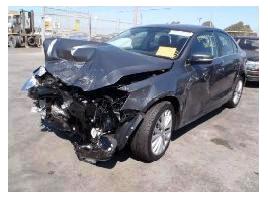
Collision Coverage is designed to put you back to the position you were in right before the accident. Auto policies are written in a way that will allow insurance providers to exclude repairs by dealerships and to put used parts in your vehicle. They use the “reasonable and necessary clauses” to get away with this.
The reasonable and necessary clause (I will “nickel and dime” you clause), will be used for the labor expense also. For the labor expense too? Sadly, yes. So if your beautiful Honda was hit, forget about going to the Honda dealership to have it fixed.
These fortune 500 companies feel that it is too expensive for them. Therefore, you better find yourself a second grade bodyshop that will do the work.
Insurance carriers will average what the “on going” hourly rate is for the type of work your car needs and pay the average.
For example, if the average rate is $40/per hour, then that is what the insurance carrier will pay and not a dime more. Oftentimes the adjuster or the field representative will negotiate this rate with the bodyshop and they can get a discount on the labor rate.
However, if there is no agreement and the bodyshop charges $44 dollars/per hour, then you will be responsible for the difference ($40). Dealership rates are often on the $75 to $80 per hour range. Therefore, you either forget about the dealership or prepare yourself to pay for the difference.
I think this is highly unfair. Unfortunately, it is legal. Several non-dealership shops are very reputable and do a great job. There are also several ones that are shady at best.
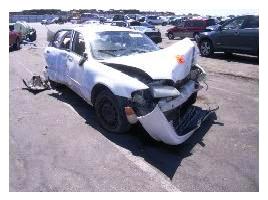
Your insurance company by law cannot require you to go to a specific bodyshop or mechanic. This is your vehicle and therefore you make the decisions. However, they can tell you what rate they will pay (they leverage against you).
They really take the choice away from the consumer to take the car to the dealer to get fixed.
Your options are: you can either pay for the difference for parts and labor out of your own pocket (can get very costly), or you can become a big headache to your insurance company so they will compensate you.
How do you do that?
Under Collision Coverage and other sections, the policy gives you the right to review every estimate, every part, and every bodyshop (all very time consuming). Since this is your car, you should ALWAYS ask for WARRANTIES (in writing that is).
Ask what bodyshops the insurance company recommends.
Since they cannot tell you where to go, they will not give you just one choice (unless you live in a town where there is only one bodyshop). What they will do is give you a list of bodyshops and let you pick one.
It will be something like “Well sir, we do not recommend anyone, but we have a few bodyshops around town that we work with, we can tell you the closest to you and you can make a choice.”
If you do this, you will have more protection.
Since these bodyshops work on a daily basis with your insurance company (trust me, they refer so much work that the insurance company virtually rules these businesses), the insurance company can tell the bodyshop how much they will pay and make sure that the job gets done.
This is good from the point of view that you can just let the two of them figure out the repairs and you can simply pick up your car when it is done.
The second thing you should do is to ask for what is called a “letter of guarantee.”
The bodyshop will issue a warranty on the repairs, paint job, and parts, so if you ever have a problem, you can come back and have them make it right (a good thing since you have OEM parts on your vehicle).
The next subject that is important to remember under Collision Coverage is the leverage the insurance company can use against you.
When you own your car, you have a title in your hand. The insurance company will issue a check to the owner of the car and the policyholder (could be the same person, couple, or different people).
All the parties have to sign to get the funds. If this is the case, the insurance company will pay your damages minus your deductible.
However, when you have an auto loan things are different. If you have an auto loan, you will be required to have this coverage on your policy, and your bank will make sure you do, or they will ensure their collateral and add it to you payment (very expensive).
This insurance taken by the bank secures the bank and not you. You would still be driving without insurance.
The reason why banks require Collision Coverage on the policy is because they know that there is protection for them.
Lien holder and financial clauses are not specified on the Collision Coverage section. They are however on your policy. These clauses will protect the lien holder’s interest on the vehicle.
This means that if the insurance carrier just decides to pay for the damages because you cannot come to an agreement with them, then they can simply issue payment to the bank!
What do you think the bank will do with the funds? They will apply it to your loan balance! Forget about getting the car fixed even if you have Collision Coverage!
The insurance company can also do this by giving you a check with your name and the bank’s name on it for the total amount of damages minus your deductible.
You must have the bank’s signature to cash the check, in which case, they will retain 100% of the funds. They have a lot of leverage against the consumer.
If there is a lien holder on the car, make sure they send payment to the bodyshop directly and not the bank!
Remember, you never have to pay your deductible directly to the insurance carrier. You either get a check for the total amount of damages minus deductible, or the insurance company pays the bodyshop directly, and you have to pay to the bodyshop your deductible when you pick up your car.
Some insurance companies (like Travelers, Safeco, All State, and others) have deductible forgiveness clauses on their Collision Coverage.
They are oftentimes spelled out on this part of the policy (they are hidden in the policy, so do not expect the insurance company to come out and call them that, you have to look for them).
These clauses “forgive” your collision deductible altogether if the collision that you had was with another insured by the same company.
So in a collision of Safeco vs. Safeco, clients will not have a COLLISION deductible (you could still have uninsured property damage if you do not have collision).
Be aware of this, I have caught many claims where adjusters just forget to tell you this. This could be significant savings to you. If both parties in the car accident are insured with the same carrier, it is likely that there is no deductible.
For example, if you back up and hit your wife’s or husband’s car, guess what? There is a big possibility that there is no deductible for the damages to any vehicle.
If you have a collision claim, the towing charges will be covered under Collision Coverage (no need for towing coverage). However, rental coverages will be excluded. You need rental coverage to get any loss of use covered.
Collision Coverage will cover your car, but it will not cover rental or dealership repairs. Be sure to read this section of your policy carefully to identify what is covered and what is not.
To read the Collision Coverage Page I, click here.
Click below for an explanation insurance coverages:
Automobile Liability Insurance or Liability Page 1
Automobile Liability Insurance or Liability Page 2
Automobile Medical Payments or Personal Injury Protection (PIP) Page 1
Automobile Medical Payments or Personal Injury Protection (PIP) Page 2
Collision Coverage (Protection Against Loss to the Auto) Page 1
Collision Coverage (Protection Against Loss to the Auto) Page 2
Comprehensive Coverage (Protection Against Loss to the Auto) Page 1
Comprehensive Coverage (Protection Against Loss to the Auto) Page 2
Under or Uninsured Motorist Property Damage (UMPD) Page 1
Under or Uninsured Motorist Property Damage (UMPD) Page 2
Under or Uninsured Motorist Bodily Injury (UMBI)
Rental Reimbursement or Loss of Use Coverage Page 1
Rental Reimbursement or Loss of Use Coverage Page 2
Restoration Coverage
Towing and/or Road Assistance Coverage (Emergency Packages)
|
For a Free Review of Your Case
Please Call (866) 878-2432 |

Auto Insurance Claims Home | Auto Claim Questions | Free Newsletter |
Best Insurance Carriers |
About Agents |
Claim vs Rate |
Accident Photos | Calculate Pain and Suffering | Calculate Pain and Suffering Settlements |
Driving Tips |
Claim Blog |
Auto Claim Forum |
Find a Lawyer |
Attorney Directory |
Site Policies |
Your Host |
Contact Us |
Sitemap |
Quiroga Law Office, PLLC
505 N. Argonne Rd.,
Suite B-109
Spokane Valley, WA 99212