





Ask an Attorney a Question for FREE!
How to Settle an Auto Liability Claim
Learn What to Watch Out For!
Learning how to settle auto liability claims and demands is not very difficult. However, you need to be aware of several steps that could jeopardize a good settlement.
Liability claims are nothing more than a negotiation between two parties. You need to be able to expose your strong points and downplay your weak ones. The other party (usually an insurance company) will do just the opposite.
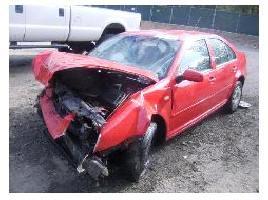
The first step in how to settle an auto liability claim and demand is to understand the strong points of your case, and be able to anticipate those that make your case weak.
Try to formulate arguments that can justify and downplay all weak points on your file.
What is a strong or weak point when learning how to settle auto liability claims and demands?
First, keep everything in perspective. What are you really settling? You are agreeing to take money in exchange of a release of any and all claims against the party that caused you damages.
What does that mean? It means that the insurance company is buying a lawsuit from you.
This is critical because anything that would bolster your claim is a “strong point”.
Consequently, anything that would make your claim less believable or be worth less is a “weak point”.
Insurance adjusters will try to dismiss many good arguments by telling you that they are not considered in the evaluation of your claim.
One great example of this is when there are accidents where alcohol or drugs are present. Adjusters tend to argue that “the fact that their client was under the influence of alcohol has nothing to do with the value of the pain caused”. They will further point out that if you had been hit at the same speed but with a sober driver, then the pain would have been the same.
Although the adjuster would have a good point regarding “causation”, do you think a jury would add more value to a claim where a drunk driver caused the accident? The answer is yes!
Another example is the amount of damages to the cars. If your car was a total loss and it had $10,000 worth of damages, the adjuster will dismiss the argument by telling you that “we are settling the injury, not the property damage; you can have a lot of damages but no injury, or a big injury and no damage, and therefore, it is irrelevant to bring the property damage to the table.”
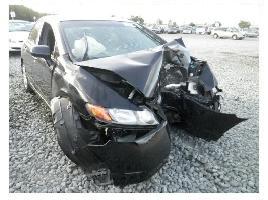
Again not true! A good attorney would take the pictures and make it very big for the jury to see (if the pictures support his/her theory). A bloody accident scene can add a lot of value to pain and suffering and to other damages. It is all about the perception of a jury!
Look at your claim as if you were looking at an outcome from a jury. Ask an attorney or the paralegals, or people that work at the local court house for the average bodily injury settlement.
The next step is to review your entire medical records. You have to do this. Adjusters go through your medical history line by line, and they will pick up anything and everything that would show that you recovered quickly and that your pain was not very bad.
When I was a claim adjuster, I was amazed at how many people would not read their records. Many adjusters will tell you that your medical records support that you are doing better every day, and that your pain was not significant by a certain date.
The only way to be able to tell if what they are telling you is true or not is by requesting a copy of your medical records and reading them very carefully.
The last step in learning how to settle an auto liability claim is by setting a negotiation strategy.
What is the lowest value you would settle for? Then create a range where that value is your very bottom.
For example, if the lowest value you would be willing to settle for is $10,000, then your range should be $10,000 to $18,000 or something like that.
Next, you must wait for the first offer. Insurance always, always starts by making the first offer. Take a look at the offer. If the offer is completely unreasonable say $100, then decline but counteroffer at an unreasonable amount, say $100,000.
I am not kidding. This happens often between attorneys and claim adjusters. Close your offer by telling the adjuster that if they think your offer is high, then they can always give you another number.
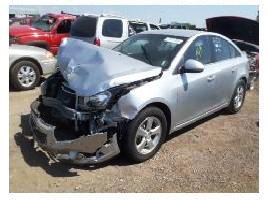
If they come back at $200, then lower yours to $98,000. They will get the point. Settling an auto liability claim and demand is really a numbers game.
If the offer is reasonable, then start at your high end $18,000 per the example above, and work gradually down. But never make two offers in the same conversation and/or letter.
Let the insurance company respond to you. Bidding against yourself will kill your claim. Follow the links below for more information on the matter.
How to settle auto liability claim and demands (overview)
Injury Demand Letter - How to write one
When to write an Injury Settlement Demand Letter
The Actual Injury Demand Letter (Format)
|
For a Free Review of Your Case
Please Call (866) 878-2432 |

Auto Insurance Claims Home | Auto Claim Questions | Free Newsletter |
Best Insurance Carriers |
About Agents |
Claim vs Rate |
Accident Photos | Calculate Pain and Suffering | Calculate Pain and Suffering Settlements |
Driving Tips |
Claim Blog |
Auto Claim Forum |
Find a Lawyer |
Attorney Directory |
Site Policies |
Your Host |
Contact Us |
Sitemap |
Quiroga Law Office, PLLC
505 N. Argonne Rd.,
Suite B-109
Spokane Valley, WA 99212