





Ask an Attorney a Question for FREE!
Actual Cash Value or ACV
Today’s Value
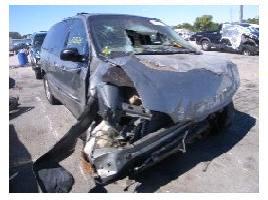
Actual Cash Value or ACV is a term present in 99% of the auto insurance policies in America. This term is usually defined in the Definitions Section of the policy. Some define it in every section of the policy where the term appears. If this is the case, this definition applies only to that specific section of the policy.
Actual Cash Value is deceiving because insurance agents do not explain exactly what it means. On the surface, Actual Cash Value appears to include all damages that you had the day of the accident. For example, if there are damages to your car, it would appear that you will get paid to get the car fixed as you want it. The word “cash” makes it appear as if the payment will be quick and without hassle.
However, Actual Cash Value is usually defined as follows:
Issues with ACV:The value to fix or repair damaged property. If the property is destroyed, it is the value of such property minus its depreciation at the instant prior to its destruction.
As noted above, I believe this term is not explained correctly to consumers. I believe people will get another coverage had they known the true meaning of ACV. Or if they decide to keep the coverage with ACV, they would at least know what to expect in case of an accident.
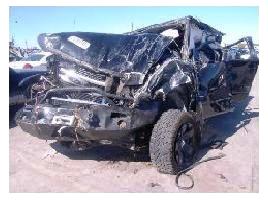
The problem however with this type of clause is not only the fact that it is poorly explained to consumers, but the fact that there is no one established way to calculate such value. Some insurance professionals will debate with me over this and will argue that ACV is the value of the item (new) minus its deprecation or the Fair Market Price.
This definition or “formula” does not take into account factors like “what happens when there is no market for your item (i.e. replacement part or vehicle)”. If that becomes the case, there will be no “actual” value because the part does not actually exits.
Also, the definition of ACV does not cover for the time you spent and hassle you went through to find what you need. The purpose of insurance is to put you back in the situation you were prior to the accident. However, your time will not be compensated. Insurance companies will argue that your time is not part of the item (car); therefore they do not owe you for it.
Also, Actual Cash Value seems to pay only for the item itself. In many occasions, insurance companies will only pay you for the cost of the item they believe it is worth. However, in many occasions they will not pay you for the installation cost. This is usually the case with stereo equipment. Insurance companies owe you for the installation. Make sure you add this cost to your claim. Installation cost is not subject to depreciation.
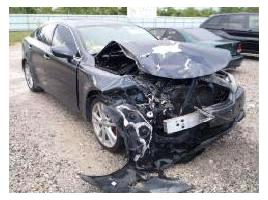
In addition, the calculation of “actual” cash value is very subjective as consumers and insurance companies will be looking at market trends and appraisals.
A common problem in ACV is with the parts used to repair your car after an accident. The insurance company will argue that the parts in your car are not “new” unless your car is really new. Therefore, they will depreciate your parts and only pay for a fraction of the total cost. If you want new parts in the repair of your damaged car, you will have to pay for the difference.
Insurance carriers use depreciation tables for common items. Stereo systems are a common area where insurance companies will use the Actual Cash Value clause to lower the amount they have to pay under the policy.
Electronic equipment (i.e. stereo system) is depreciated sometimes at a rate of 33% per year. This means that your equipment would be worth nothing in 36 months! The insurance company will figure out the age of your car (i.e. two years old) and subtract 66% from the value of your stereo (new), take a deductible and pay the remainder.
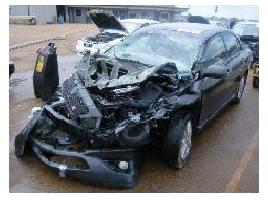
For example, a $1,000 stereo system will be depreciated as follows (two year old stereo).
$1,000 x .66% = $660 (the depreciation value). So, the carrier will take $1,000 (original cost new) and subtract $660 to arrive to $440 (they will not pay you anything if your deductible is above that amount). If your deductible is less than $440 (i.e. $250). They will take the $440 – $250, which equals $190. You would get paid $190 in a $1,000 loss (remember to add the value of the installation).
Click below for an explanation of insurance coverages and terms:
Automobile Liability Insurance or Liability Page 1
Automobile Liability Insurance or Liability Page 2
Automobile Medical Payments or Personal Injury Protection (PIP) Page 1
Automobile Medical Payments or Personal Injury Protection (PIP) Page 2
Collision Coverage (Protection Against Loss to the Auto) Page 1
Collision Coverage (Protection Against Loss to the Auto) Page 2
Comprehensive Coverage (Protection Against Loss to the Auto) Page 1
Comprehensive Coverage (Protection Against Loss to the Auto) Page 2
Under or Uninsured Motorist Property Damage (UMPD) Page 1
Under or Uninsured Motorist Property Damage (UMPD) Page 2
Under or Uninsured Motorist Bodily Injury (UMBI)
Rental Reimbursement or Loss of Use Coverage Page 1
Rental Reimbursement or Loss of Use Coverage Page 2
Restoration Coverage
Towing and/or Road Assistance Coverage (Emergency Packages)
Insurance Clauses and Terms
Overview
Actual Cash Value or ACV
Additional Insurance Clause
Cancellation of Coverage Clause
Choice of Law Clause
Forum Selection Clause
Duty to Cooperate Clause
Duty to Report Losses Clause
Financial Responsibility Clause
Insurable Interest Concept
Interpretation of the Policy Concept
Mandatory Arbitration Clause
Mitigation of Damages Clause
Non Duplication of Benefits Clause
Proof of Loss Clause
Promissory Estoppel Concept
Reservation of Rights Concept
Reasonable and Necessary Clause
Right of Appraisal Clause
Right of Settlement Clause
Rights of Counsel Concept
Subrogation of Rights Clause Part I
Subrogation of Rights Clause Part II
Statute of Limitations Concept
Replacement Cost Value
Restoration Coverage
Transfer of Benefits Clause
|
For a Free Review of Your Case
Please Call (866) 878-2432 |

Auto Insurance Claims Home | Auto Claim Questions | Free Newsletter |
Best Insurance Carriers |
About Agents |
Claim vs Rate |
Accident Photos | Calculate Pain and Suffering | Calculate Pain and Suffering Settlements |
Driving Tips |
Claim Blog |
Auto Claim Forum |
Find a Lawyer |
Attorney Directory |
Site Policies |
Your Host |
Contact Us |
Sitemap |
Quiroga Law Office, PLLC
505 N. Argonne Rd.,
Suite B-109
Spokane Valley, WA 99212